
For what feels like far too long, I’ve been trying to understand my own unconscious biases. I knew I wasn’t immune to them. I knew I must have some. But I kept racking my brain trying to work out what they were and how I could bring them into conscious awareness so I could do something about them.
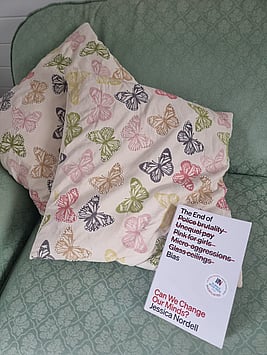
And then, to my great relief, I came across this book (The End of Bias: Can We Change Our Minds? by Jessica Nordell) on a visit to the wonderful Foyle's bookshop in London.
Reading it helped me realise something important: I don’t actually need to identify my biases in order to change them.
What this book taught me
One of the key things I learned is that our brain’s universal urge to categorise naturally leads to bias. It’s simply how human minds work.
I also learned that our biases are shaped by countless influences: cultural, historical, family, friends, peers, and lived experiences, to name just a few. With so many threads woven together, it’s really difficult (perhaps impossible) to trace exactly what our biases are or where they come from.
That realisation was freeing. I could stop beating myself up for not being able to pinpoint my biases or explain their origins. They aren’t a personal failing, they’re a by-product of being human.
I now have practical ways of overcoming biases
Equally importantly, the book goes on to offer real-world, practical ways to reduce bias without needing to fully understand it first. It focuses on interrupting automatic behaviour and putting things in place that prevent bias from taking hold.
Some of the ideas may sound familiar — for example, removing names and ages from CVs before shortlisting. But the book goes much further, showing how we can intentionally expose ourselves to new information in ways that encourage meaningful updates to our subconscious “categories”, gradually reducing bias over time.
This was exactly the news I needed.
I can now stop trying to do the impossible- understanding all my own hidden biases. Instead I can focus on acting in ways that both limit their impact and reduce them. That feels practical, hopeful, and achievable.
And of course all this gives me new ways of helping my clients as well as myself, as our unconscious biases can of course be directed towards ourselves as well as others.